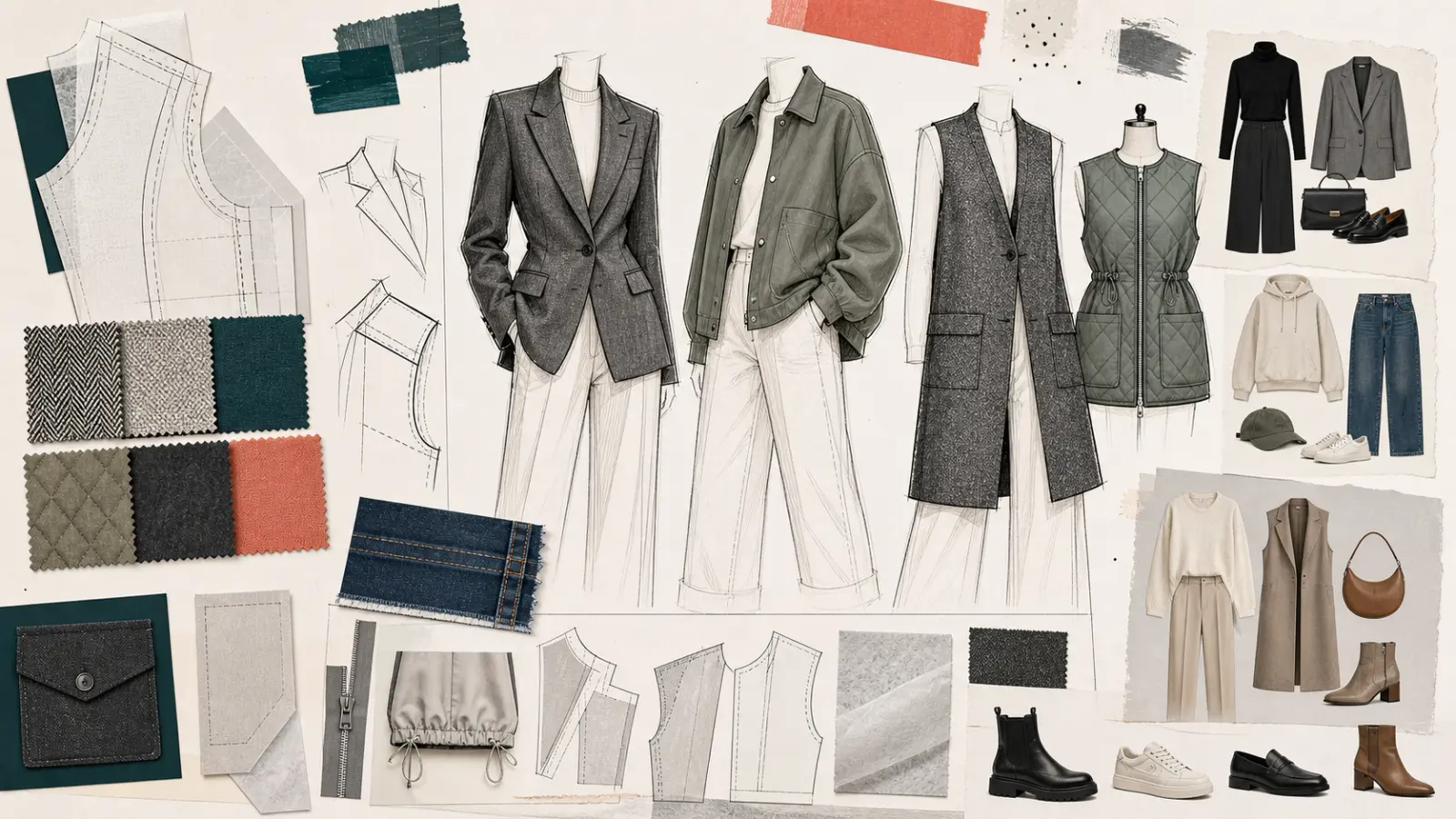
A jacket adds structure, a vest adds layering and comfort. Below is a practical overview of silhouettes, fabrics, and fit checkpoints—so your project turns out predictable and wearable. Browse the catalog: women’s jackets & vests and men’s vests.
Why jackets and vests are worth sewing
A jacket is the “framework” of an outfit. It shapes the shoulder line, creates clean verticals, and makes even a simple base (tee + jeans) look more intentional. Depending on the cut, a jacket can read as business (tailored), relaxed (oversized, dropped shoulder), or sporty (zipper, hood, drawcord hem).
A vest works differently: it adds warmth and structure without sleeves, so it’s comfortable and easy to layer under outerwear. A tailored vest sharpens an outfit, an insulated one makes transitional weather easier, and a longer vest helps balance proportions and visually elongate the silhouette.
How to pick a model for your goal
For a predictable result, answer three questions first: where will you wear it, what will you pair it with, and what fabric are you realistically ready to sew right now.
- Office and smart casual. Look for lined jackets with lapels (or a clean neckline) and semi-fitted vests that layer nicely over shirts and lightweight turtlenecks.
- Everyday city wear. Straight or relaxed jackets with fewer “precision” details are easier to sew and to fit. For vests, zippers and drawcord hems are practical for daily use.
- Layering capsules. Longer vests and moderately roomy jackets are easier to wear over chunky knits and overshirts.
- Statement pieces. Texture does the work: tweed, bouclé, teddy, eco-leather—paired with simple construction or bold pockets and flaps.
If you’re unsure, start with a true wardrobe workhorse: a straight jacket or a moderately roomy vest with clean, simple construction. It’s easier to adjust and easy to re-sew in a different fabric later.
Jacket silhouettes: from basics to statement pieces
Most patterns differ by three things: volume, shoulder construction, and closure/collar type. Use this quick map to orient yourself.
The classic tailored jacket
Your capsule staple: balanced ease, a defined shoulder line, and lapels or a neat neckline. It shines in suiting wool, wool blends, and stable cottons. For a polished look, the key is stabilizing the fronts and pressing every step—structure comes from technique as much as from the pattern.
Straight or relaxed jacket
Great for everyday outfits and beginner-friendly. A dropped shoulder, fewer small details, and simpler pockets reduce precision stress. Straight silhouettes also carry textured fabrics well and can be worn like a light jacket.
Cropped jacket
A proportion tool: it highlights the waist and pairs beautifully with high-rise trousers and skirts. The main checkpoint here is balance—front/back length and hem level should match your body, otherwise the jacket may “ride up.”
Zip-front and/or hooded jacket
A hybrid between a jacket and casual outerwear. It works especially well in cozy or technical materials (teddy, quilted fabrics, dense knits). Pay attention to stabilizing the zipper area—good support prevents waviness and keeps the front edge crisp.
Vest silhouettes: tailored and utilitarian
A vest can be a standalone piece (top-like), part of a suit, or an outer layer over a hoodie. That’s why fabric choice and fit targets vary a lot.
Tailored vest
Typically lined, with darts or princess seams, sometimes with a collar and buttons. Mid-weight suiting fabrics are ideal. The “make-or-break” areas are the armholes and neckline: clean finishing and accurate shoulder length are what make a vest look professional.
Everyday layering vest
Straight or slightly roomy, often with patch pockets, a zipper, a stand collar, and/or a drawcord hem. This is a strong transitional-weather layer: it adds warmth without overheating and works over long sleeves, sweatshirts, or shirts.
Long vest
Elongates the silhouette and makes simple outfits look styled. Prioritize shoulder fit and length balance (your height and typical shoes matter), so the vest doesn’t visually “pull” the look downward.
Men’s vest
In menswear, a vest often solves a practical problem: warm the core while keeping arms free. Look for comfortable armholes and functional details like a hood/stand collar and an adjustable hem—small design choices that affect daily comfort.
Explore patterns here: women’s jackets & vests and men’s vests.
Fabrics, lining, and interfacing
The same pattern can look completely different depending on fabric. Before you buy, evaluate three properties: weight, drape, and shape retention.
- Suiting fabrics (wool, poly-viscose, tweed). Great for lapels, collars, and structured lines.
- Denim, corduroy, stable cotton. More casual; loves topstitching and larger pockets.
- Textured fabrics (teddy, bouclé, faux fur). Add volume—choose simpler designs and plan for seam thickness.
- Quilted fabrics and shell fabrics with insulation. Ideal for vests and jacket-hybrids; accurate markings help prevent layers from shifting.
For lined garments, you’ll typically need a lightweight lining (viscose, acetate, or dedicated lining fabric) and interfacing to stabilize fronts, necklines, pocket areas, and hems. The exact stabilization plan is best taken from the instructions for each specific pattern.
Fit and sizing: what to check before cutting
The most common reason projects disappoint is sizing—either choosing the wrong base size or skipping finished-garment measurements when they’re provided. Take your key measurements (bust/chest, waist, hips, height), compare them to the size chart, and then check ease or finished measurements if available.
A widely used practical starting point for adult sizes is selecting by chest circumference (often, chest ÷ 2 gives the nominal size). Treat that as a baseline, not a rule: your preferred ease and fabric thickness should drive the final choice.
If this is your first jacket, make a quick test fit before attaching lining (or sew a simple toile in a similar-weight fabric). Adjusting shoulder slope, armhole comfort, and sleeve length is much easier at that stage.
Sewing without stress: practical tips
- Pre-shrink your fabric. Many outerwear and suiting fabrics change after steam or washing—do this before cutting.
- Stabilize “risk zones.” Necklines, armholes, front edges, and shoulders benefit from support, especially in loose weaves or pile fabrics.
- Press as you go. Good pressing flattens seams, improves shape, and is a big part of a professional finish.
- Transfer markings carefully. Notches, darts, pocket placements, and balance points save hours later.
- Plan your lining strategy early. Decide how you’ll turn the garment and how the hem will be finished.
If you prefer step-by-step guidance, check the Sewing Master Classes section with detailed tutorials for specific patterns and construction details.
How to style
- Jacket + denim. The fastest “pulled together” outfit—add a belt and shoes with a clean shape.
- Vest + shirt. Great for office or study settings: the look stays sharp while sleeves remain lightweight.
- Insulated vest + hoodie. Comfortable transitional layering; works with joggers and with jeans.
- Long vest + monochrome base. The vertical line visually elongates the silhouette.
Quick start plan
- Pick your goal (office / everyday / warmth) and a fabric you truly want to sew.
- Open the right catalog section: women’s jackets & vests or men’s vests.
- Review measurements, ease, and model details in the pattern description.
- Gather notions and interfacing in advance; pre-shrink the fabric.
- Sew following the instructions; use Master Classes for tricky steps.
Jackets and vests are rewarding projects: once you find a flattering base, you can repeat it in new fabrics and build an entire capsule. Start simple—and iterate.
Mini FAQ
Do I need lining?
For a classic jacket, lining is usually worth it: it improves wear comfort, hides internal seams, and supports the shape. For casual jacket-hybrids and vests, lining is still helpful, but some designs use facings or clean bindings instead—follow the pattern’s construction and your seasonal needs.
Can I sew a jacket from knit fabric?
Yes, but it will behave more like a soft cardigan-jacket. Choose simpler designs with minimal structure, and stabilize the shoulders, neckline, and front edges so the garment keeps its shape over time.
How do I know if a fabric holds its shape?
Scrunch it in your hand: if wrinkles relax quickly, the fabric is springy and suitable for lapels and crisp lines. If creases stay, the fabric is drapey and will look best in relaxed silhouettes and simpler details.
Which is harder: a jacket or a vest?
A vest is usually faster (no sleeves), but it demands very clean finishing on armholes and neckline. A jacket is more complex because of sleeves, the shoulder area, and often lapels. If you’re new, start with a simple vest or a straight, uncomplicated jacket.
- Shirt dress with cuffs and pockets
- Sewing a windbreaker, pants, and shorts for girls
- Women’s Jumpsuit (Pattern 3205)
- Balloon Sundress with a Double Bodice
- How to sew a women's jacket 3243
- Master class with tailoring of women's vest 3244
- How to Sew Men’s Shirt 2031
- Women’s raglan hoodie with a hood and snap-button placket: step-by-step tutorial
- Sewing Master Class for Jacket 1096, Skort 1095, and Capri Pants 1093–1094
- How to Sew a Women’s Faux Fur Coat with a Lining